




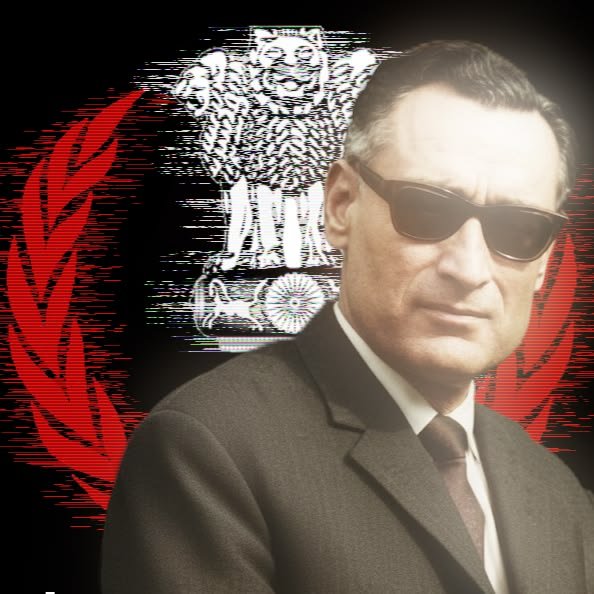
Rameshwar Nath Kao (R.N. Kao) was the founder and first chief of India’s external intelligence agency, the Research and Analysis Wing (R&AW). Revered as the father of Indian intelligence and nicknamed the “Gentleman Spymaster,” he lived an extraordinarily low-profile life, rarely photographed and completely avoiding the media.
Born on May 10, 1918, into a Kashmiri Pandit family in Varanasi, Kao was raised by his uncle after losing his father early in childhood. He earned a bachelor’s degree from Lucknow University and a master’s in English Literature from Allahabad University before joining the Indian Police (IP, now IPS) in 1940.
Following India’s independence, Kao joined the Intelligence Bureau (IB) and was put in charge of Prime Minister Jawaharlal Nehru’s personal security. In 1955, he gained international recognition for his meticulous investigation into the bombing of the Kashmir Princess aircraft, working alongside Chinese and British intelligence officials.
At the personal request of Ghana’s President Kwame Nkrumah, Nehru sent Kao to Accra, where he helped establish Ghana’s foreign intelligence and security apparatus from the ground up.
Following intelligence gaps exposed during the 1962 Sino-Indian War and the 1965 Indo-Pakistani War, Prime Minister Indira Gandhi decided to create a dedicated external intelligence agency. On September 21, 1968, R&AW was born with R.N. Kao as its first Secretary. The elite cadre of officers he handpicked and trained became famously known as the “Kaoboys.”
Notable Facts
-
Global Recognition: Count Alexandre de Marenches, former head of the French external intelligence agency (SDECE), named Kao one of the five greatest intelligence chiefs of the 1970s.
-
Extreme Secrecy: Despite shaping South Asian geopolitics for decades, Kao never gave a single press interview in his lifetime, and only a handful of his photographs exist in the public domain.
